London Hair Extensions
Tape in vs weft hair extensions comes down to your hair and your routine. Tape-ins are flat, fast to fit and suit fine to medium hair worn down. Wefts add more volume, hide the bonds better in updos and suit medium to thick hair. Both need a refit every 6-8 weeks.
This comparison draws on UK supplier and trade sources and sits within our types of hair extensions guide. We show where the sources agree, where they differ and what to ask your stylist before you choose.
Tape in vs weft hair extensions at a glance
| Tape-in | Weft (sew-in) | |
|---|---|---|
| How it is attached | A thin slice of your hair sandwiched between two taped wefts | A strip of hair sewn, beaded or clamped in rows |
| Feel | Lightweight and flat | Slightly bulkier; hand-tied wefts lie flatter |
| Best hair type | Fine to medium | Medium to thick |
| Fitting time | Quicker | Longer |
| Refit | 6-8 weeks | 6-8 weeks |
| Styling updos | Tapes can show in high ponytails | Bonds are hidden in rows |
| Reuse | Hair can be reused after re-taping | Hair can last longer overall |
What is the difference between tape-in and weft extensions?
The difference is the attachment. Tape-ins use adhesive: pre-taped wefts, about 1.5 inches wide according to Cooviphair, sandwich a thin section of your hair between two strips. Wefts are a continuous strip, or track, of hair that is sewn or beaded into your natural hair, applied row by row.
That one difference drives everything else: how flat the result sits, how long the fitting takes, how the hair is reused and which hairstyles you can wear.
Which is better for fine hair?
For fine or thin hair, tape-ins are the usual suggestion. Cooviphair says tape-ins are lighter and blend without stressing delicate roots, and a UK trade supplier, Hair Made Easi, says tape suits fine to medium hair that lies flat and wants a discreet result. The same supplier says wefts are not ideal for very fine hair, where attachment points may show or the weight could cause strain.
One exception: Laced Hair describes hand-tied and hybrid wefts as suited to fine or thin hair. If you have fine hair and like the idea of a weft, ask your stylist whether a hand-tied version is an option.
Which is better for thick hair?
Wefts are usually better for medium to thick hair. Thicker natural hair hides the weft attachment more easily, and the weft adds density across a wider area, which gives volume as well as length. Hair Made Easi says tape is not ideal for very thick or coarse hair, where the flat bond can show.
Which is faster to fit?
Tape-ins are generally quicker, but the sources give different times. Cooviphair puts a full head of tape-ins at 30–60 minutes and wefts at 1.5–3 hours, while Hair Made Easi says a full head of tape can typically be done in under two hours. Cliphair says a weave can turn thick, short hair into long hair in under 2 hours. Your stylist’s own timing is what counts, because it depends on how much hair is fitted and the technique.
How long do tape-ins and wefts last?
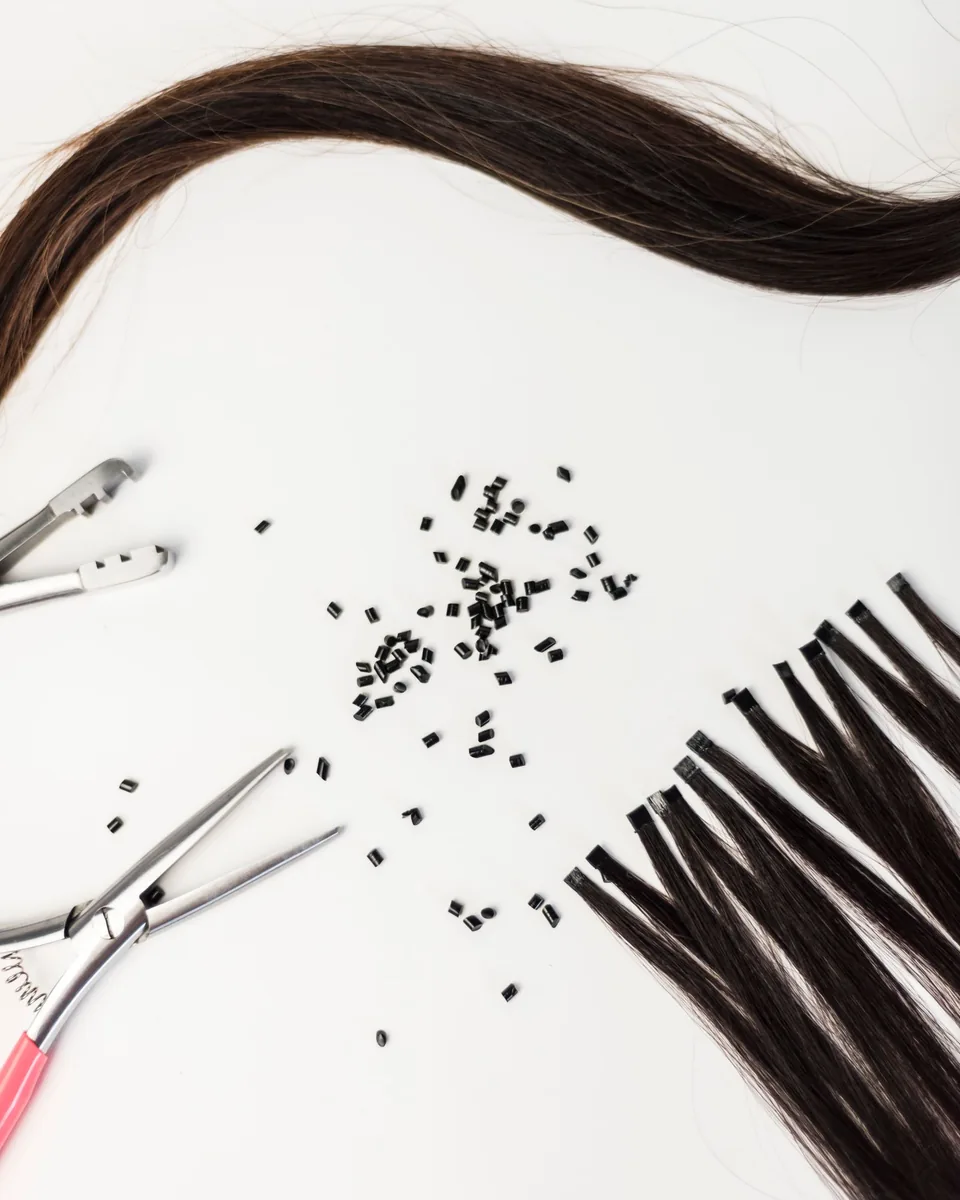
Both need maintenance every 6-8 weeks, according to Cooviphair, Laced Hair and Hair Made Easi. The difference is how long the hair can be reused. Cooviphair says tape-in hair can be reused 2-3 times, while weft hair can be reused for 6-12 months. Laced Hair adds that tape tabs are removed and replaced to refit tape-ins.
Laced Hair also advises choosing a specialist who completely removes and reinstalls wefts rather than just sliding the same section up, because placing the track on different strands of hair helps prevent long-term tension.
Which is cheaper, tape-in or weft?
Cooviphair says tape-ins have a lower initial install cost but need more frequent move-ups, while wefts cost more upfront but the hair lasts longer, making them more cost-effective over time. That is one supplier’s view, and we found no like-for-like London prices. Our London cost guide lists the figures we found for tape-ins and ring methods.
Which is better for ponytails and updos?
Wefts are better, according to Cooviphair, because the bonds are hidden in rows and you have more styling freedom. Tape-ins can show at the sides of the wefts in a high ponytail or sleek updo. If you wear your hair up most days, mention it at your consultation: small ring methods are another option.
Which is safer for your own hair?
Neither comes without some risk. The British Association of Dermatologists lists weaves and hair extensions among the causes of traction alopecia, hair loss caused by constant pulling, and says early cases can regrow once tension is removed. Its patient information describes itching, soreness, flaking or thinning at the front, sides or back of the scalp as signs to act on.
Cooviphair says tape-ins are not damaging if applied and removed professionally, and that problems come from oily products or improper removal. Whichever you choose, keep your refits. This is general information, not medical advice.
Frequently Asked Questions
Tape-ins are usually suggested for thin or fine hair because they are lightweight and flat. Sewn wefts can show or strain very fine hair, though hand-tied wefts are described as suitable. A consultation will confirm which works for your hair.
Both need a refit every 6-8 weeks. Cooviphair says weft hair can be reused for 6-12 months, compared with 2-3 reuses for tape-in hair, so wefts last longer overall, though how well you look after them and how closely you follow your stylist’s advice also matters a great deal.
Possibly, but the sides of the tapes can show, especially in sleek updos. Wefts hide the bonds in rows, and ring methods sit closer to the hairline, so tell your stylist how you usually wear your hair.
Not when applied correctly, according to Cooviphair, which says hand-tied and genius wefts are lightweight and comfortable. Very fine hair is more sensitive to weight, so ask your stylist about the amount and the type of weft.
Often yes, because both are fitted by stylists and refitted on a regular schedule. Ask whether your stylist offers both methods, since someone who does can recommend the right one rather than defaulting to what they know best.
Next steps
For method detail, see our tape-in extensions page. Decide which matters more to you, a flat discreet finish or volume and styling freedom, then book a consultation. Use our salon finder to look for stylists by borough and method, or read the blog for shorter answers.
How we prepared this guide: we compared supplier guides from Cooviphair, Hair Made Easi (August 2026), Laced Hair (June 2026) and Cliphair with patient information from the British Association of Dermatologists, all read on 15 November 2026. These are supplier views, not independent tests, and timings vary. The photographs are stock images from Pexels.
Ready to compare salons? Browse by London borough. Prime and Takeover placements are paid; guides are independent.