 London Hair Extensions
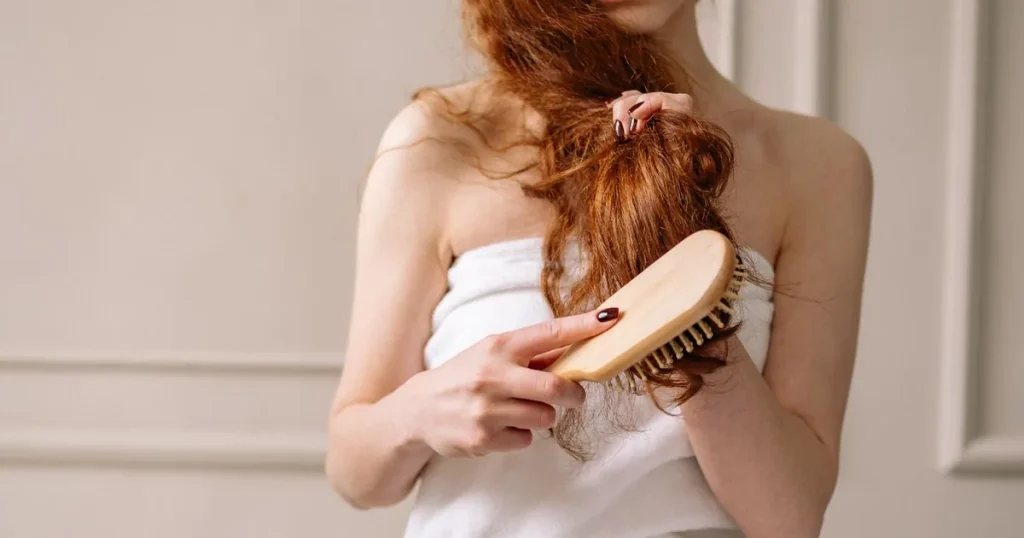
How to wash hair extensions: brush them first, use lukewarm water and sulphate-free shampoo, work the product downward without scrubbing, condition the mid-lengths and ends only, and dry the roots and attachments completely. Do this once or twice a week, or as your stylist advises, and avoid washing straight after a fitting.
This guide is a step-by-step wash routine plus the habits that surround it. It is built from UK supplier guidance, and where the sources differ, we say so. For general upkeep between visits, our types guide explains how each method is attached.
How to wash hair extensions step by step
- Brush first. Use a soft-bristle or loop brush or a wide-tooth comb, from the ends upward, holding the roots so the bonds do not pull.
- Stay upright. Hair Rehab London advises against washing your hair upside down, which can cause tangling.
- Use lukewarm water. Avoid excessively hot water, which the sources say can dry the hair.
- Shampoo gently. Choose a sulphate-free shampoo and work it downward. Cliphair says to avoid rubbing, twisting or scrubbing in circles, and to focus on the roots for permanent extensions.
- Condition the lengths only. Apply from mid-length to the ends, and keep conditioner away from tapes, rings and bonds. Cliphair says to leave it on for 2–5 minutes.
- Rinse thoroughly. Leftover product near the bonds can cause slipping.
- Squeeze, do not rub. Use a microfibre towel to reduce frizz.
- Dry the roots completely. Cliphair says leaving attachments damp can lead to slippage, frizzing and scalp irritation, and Cooviphair notes mildew risk for wefts.
How often should you wash hair extensions?
The sources do not agree, so follow your stylist’s advice. Hair Rehab London says once or twice a week and warns against over-washing. Cooviphair says two or three times a week. Cliphair suggests permanent extensions can be washed every 2-3 days. Washing less often can help the hair last, while too many washes may loosen tapes and bonds.
Cooviphair adds that you should not wash a tape-in fitting within 48 hours of the appointment, so ask your stylist for the waiting period for your method.
What shampoo and products should you use?
Sulphate-free is the common advice. Hair Rehab London says to avoid shampoos with sulphates, parabens or alcohol, which can dry out extensions. Cliphair recommends lightweight serums and sprays, hydrating oils on the mid-lengths and ends, and alcohol-free styling sprays, and says to avoid heavy waxes, strong-hold sprays and root oils on semi-permanent hair.
Oily products near bonds, tapes or rings can cause slipping, so keep oils and masks to the lengths.
How do you wash different types of extensions?
| Type | Washing point |
|---|---|
| Clip-in | Wash far less often than fitted hair; dry each piece flat on a towel |
| Tape-in | Avoid oils and conditioner near the tabs; hold the bonds when brushing |
| Weft | Cleanse the scalp between rows and dry the base completely |
| Micro and nano ring | Keep the bonds clean, dry and free of conditioner |
| Flat tip | Wash gently and protect from heat styling |
How do you dry and style after washing?
Air-drying is gentlest. If you use heat, apply a heat protector first and keep tools below 180°C, as Hair Rehab London and Cliphair advise, and keep hot tools away from bonds, tapes and wefts. The London salon quoted by HELLO! suggests rough-drying with your hands to around 80% before styling with a brush. Use medium heat and point the airflow downward.
How do you sleep and swim with extensions?
At night, tie permanent extensions in a loose braid or ponytail and sleep on a silk or satin pillowcase, never with wet hair. For swimming, tie your hair up, coat mid-lengths and ends with leave-in conditioner before, and rinse immediately after. Hair Rehab London says chlorine and salt water can cause dryness, tangling and discolouration.
What if your extensions are matted or your scalp is sore?
Matting usually builds at the roots when refits are missed, and Cliphair notes the gap grows as your hair grows. Separate the bonds with your fingers daily, as Hair Rehab London suggests, and book your refit. If you have itching, soreness or flaking of the scalp, or thinning at the front, sides or back of the head, ask your stylist to loosen or remove the extensions. The British Association of Dermatologists lists extensions among the causes of traction alopecia and says early cases can regrow once tension is removed; see its patient information. This is general information, not medical advice.
Frequently Asked Questions
Brush first, use lukewarm water and sulphate-free shampoo, work downward rather than scrubbing, condition only the lengths and dry the roots completely. Avoid washing upside down, and never brush wet extensions; detangle with fingers and a wide-tooth comb instead.
Yes, from mid-length to the ends. Keep it away from tapes, rings and bonds, because oily products can cause slipping. Rinse well, leave it on only for the time the label suggests, and ask your stylist which conditioner they recommend for your method.
Cooviphair says not to wash tape-ins within 48 hours of the fitting. Other methods may differ, so ask your stylist for the exact waiting time for yours before you leave the salon, and write it down so you remember.
No. Hair Rehab London says never to go to bed with wet hair, and Cliphair warns that damp attachment points can cause slippage and scalp irritation. Dry the roots and attachments thoroughly first, then braid your hair loosely before sleeping.
Clip-ins are washed less often because they are not worn constantly. Dry each piece flat on a towel after washing, and always remove them before bed, which Cliphair says extends their life significantly and keeps them tangle-free.
Next steps
Ask your stylist for written aftercare for your method, and compare it with the points above. If you are still choosing a method, read tape in vs weft, or find a salon by borough and method. See also the blog.
How we prepared this guide: we compared care guidance from Hair Rehab London, Cliphair and Cooviphair with a salon interview in HELLO! (updated July 2021) and patient information from the British Association of Dermatologists, all read on 15 November 2026. Sources differ on washing frequency. The photographs are stock images from Pexels.
Ready to compare salons? Browse by London borough. Prime and Takeover placements are paid; guides are independent.